Swedish fika
If you’ve ever been to Sweden, there’s one thing you’ll have heard of for sure: the Swedish fika, this phenomenon that seems to have some kind of holy, bordering on insanity, status in the entire country
Let’s start off with the semantics.
Grammatically, fika is both a verb and noun.
Therefore, you can just as well say that you are currently “fiking” or “taking a fika” in Swedish. But etymologically is where it gets really exciting. The word is enveloped in several myths regarding its’ origin, of which one is that it’s an anagram for “coffee” (“kaffe” in Swedish).
It’s also said that it comes from the nowadays not very used adjective “fiken”, which means to have a craving or be in the mood for something.
What to order or bake for Swedish fika?
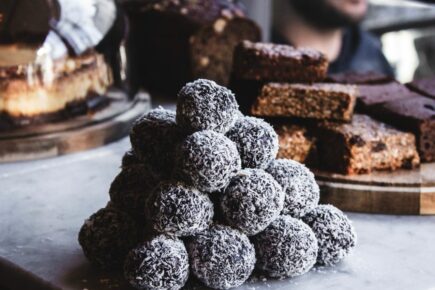
Chokladbollar
If you’re rather a chocolate kind of person, these specialties will be more to your taste. Not only are they ridiculously easy to make, the recipe to these oat-based, coco flake covered goodies can be adopted to please both adults and children. If you are preparing them for an all grown up party, for example, you can try adding some coffee and more cocoa.

Kanelbullar
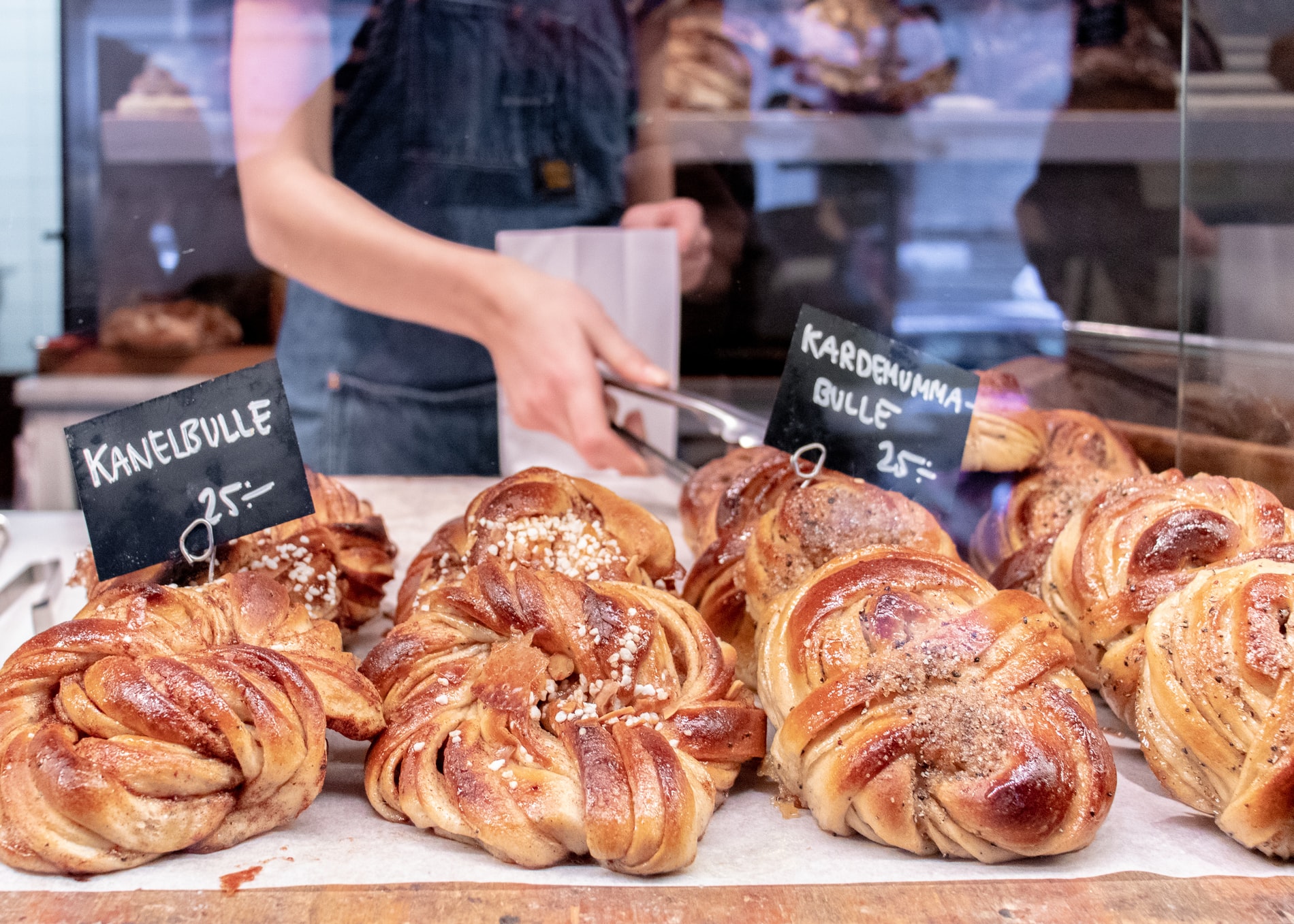
Nota bene: even though this pastry is very similar to the cinnamon roll, swirl or snail so enthusiastically adopted by the States, the kanelbulle is the original delicacy. The biggest difference between the kanelbulle and its americanized cousin is the lack of frosting and addition of cardamom in the first one, and it’s perhaps one of the most classic gateaux on the Swedish fika menu.
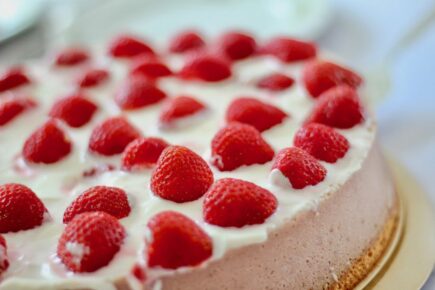
Jordgubbstårta
If there’s something a Swede with a sweet tooth and no lactose allergy never turn down, it’s a cream excessive jordgubbstårta, which translates to strawberry cake. But of course, this is not your ordinary everyday fika. If you’re lucky, you’ll find this delicacy in a well-assorted patisserie and maybe get a slice for dessert when celebrating midsummer.
Where to go for fika?